Skip to content
IT·samleren

IT news from IEEE Spectrum

49 articles from IEEE Spectrum

Updated 9 minutes ago

IEEE Spectrum

The Future Is Fanless: 100% Heat Capture for Liquid Cooled AI Servers

This article is brought to you by CoolIT, an Ecolab Company . Beyond 250 kW a server rack can no longer be cooled by a hybrid approach of liquid and air. At this density a 70/30 liquid-air split leaves 75 kW of air load. The air cooling system needed to move it brings cost and complexity few operators will accept. The answer is near-total heat capture. Liquid takes effectively all the heat, air falls below 1 percent of the load, allowing the server to run fanless. CoolIT builds these loops today from modular…

spectrum.ieee.org

IEEE Spectrum

Nvidia Brings Generative AI to Video Game Lighting

On 1 September, Nvidia launched a new generative AI approach to rendering video game graphics that CEO Jensen Huang has previously hailed as a “GPT moment for graphics.” Instead of forcing graphics processors to calculate the material physics and lighting of virtual surfaces pixel-by-pixel to achieve high levels of photorealism, Deep Learning Super Sampling 5 (DLSS 5) is a neural rendering approach that “paints” these properties onto surfaces in real time. Versions of DLSS have been released since 2018, each…

spectrum.ieee.org

IEEE Spectrum

Parallel Reads and Write Optimization for Large-Scale Data Replication

This White Paper gives data engineers and architects a practical overview of how parallel partitioned reads, write-path optimization, and cloud-native bulk loading reduce large-table replication times, and why replication speed has become a business concern as data volumes grow. Download this free whitepaper now!

content.knowledgehub.wiley.com

IEEE Spectrum

Superconducting Transistors to Solve Quantum Computing Woes

A quantum computer can be an ungainly thing, because even the most elegant qubit-housing cryostat usually sprouts a thicket of control cables. Most qubits don’t work above a fraction of a degree above absolute zero, but the conventional electronics that control the qubits don’t work in the cryogenic cold. Hence connecting cables need to route information out of the cryostat. The more qubits a computer has, the more cables it needs. More than an eyesore, this overgrowth is a problem for scaling quantum computers.…

spectrum.ieee.org

IEEE Spectrum

Rethinking Robot Safety in the Age of AI

This article is brought to you by VicOne . Robot safety has traditionally asked: Can a machine remain safe when something goes wrong? Physical AI raises a harder question: Can a machine remain safe when an attacker changes what it sees, decides, or does even when nothing appears to have failed? As AI and robotics continue to advance at an unprecedented pace, modern robots perceive through multimodal sensors, interpret context using AI models, and translate those interpretations into physical action. As they move…

spectrum.ieee.org

IEEE Spectrum

The AI Inference Revolution Is Here

Since about 2020, AI has largely focused on training bigger and better models. Large language models (LLMs) ballooned from millions of parameters to trillions. This proved effective: The largest version of OpenAI’s GPT-3, released in 2020, correctly answered just 43.9 percent of questions on a popular knowledge-and-reasoning benchmark. Just four years later, GPT-4o reached a score of 88.7 percent on the same exam, effectively matching those of human experts. Advanced AI labs are still training ever larger models,…

spectrum.ieee.org

IEEE Spectrum

How OpenAI Used Its Own LLMs to Design Its Jalapeño Chip

On 25 August, OpenAI fully unveiled Jalapeño, the company’s debut AI accelerator chip. Jalapeño delivers up to 13.4 petaflops of 4-bit compute and accesses 232 gigabytes of the most advanced memory available, linking to it at a blazing 15.4 terabytes per second. Benchmarks cited by OpenAI show that Jalapeño can reduce end-to-end latency (the time between prompt to last token) by up to 3.6 times when compared to Nvidia’s GB300 —a chip the company currently relies on—and do so while consuming less power. Whether…

spectrum.ieee.org

IEEE Spectrum

How Sound Could Make Sense of Big Data

In the art of transforming data into easily interpretable displays, visualization is usually the go-to option. But sight isn’t the only sense we can use to make sense of numeric information. Sonification is visualization’s lesser-known cousin: the practice of translating data into sounds. While we may not think of it explicitly, sonification is common in everyday life. For example, a car’s parking assist system takes the distance between a car and an object in its path and transforms it into a beeping frequency,…

spectrum.ieee.org

IEEE Spectrum

Cash In on the AI Boom by Renting Out Your Spare Compute

If you own an at-home server, a gaming computer, or just a laptop that doesn’t get much love, listen up. You can now put that spare computing power to use and earn some passive income in the process. AI companies are hungry for more compute to run AI inference—the process of using a pretrained model to respond to queries—and they’re willing to pay you for it. “Imagine Uber or Airbnb, but for AI-inference computing tasks,” says Ilman Shazhaev , founder and CEO of Far Labs , based in Abu Dhabi. The AI boom has…

spectrum.ieee.org

IEEE Spectrum

The E.U.’s AI Drive Undermines Its Own Chip Strategy

This story was originally published by Tech Policy Press . The European Union’s push for technological sovereignty faces an uncomfortable contradiction. As the E.U. rolls out AI factories, gigafactories, and new data centers, it is creating a surge in demand for the advanced semiconductors that underpin artificial intelligence. Yet Europe produces fewer than 10 percent of the world’s chips and remains heavily dependent on U.S. designers and Asian manufacturers for the most advanced processors. That tension sits at…

spectrum.ieee.org

IEEE Spectrum

IBM Built the Cold War’s Most Powerful Code Breaker for the NSA

At the height of the Cold War, one very specialized computer was so secret that the world didn’t know it existed. It ran its jobs up to 200 times as fast as any other computer of its time. It was the U.S. National Security Agency’s main cryptographic processor in operation from the time of the Cuban Missile Crisis in 1962 through the Vietnam War and on past the 1975 Helsinki Accords . The machine stopped running only when its moving parts finally gave out. The Harvest computer mattered because of what it was as…

spectrum.ieee.org

IEEE Spectrum

Poetry for Engineers: Safe Distance

How do I touch you across the ocean, across cold depths where light travels through glass. Not copper—fibers. Optical. Through liquid glass, through flickering light that carries you in fragments. Light broken into pulses. You say: it’s easier this way. What are we missing like this? You smile. Safe distance. I say: network. Signals slide beneath the sea, through cables thinner than trust, faster than touch, slower than longing. We stand alone, together. Synchronous, yet apart. Icons replace skin, latency replaces…

spectrum.ieee.org

IEEE Spectrum

From AI Copilots to Agent Swarms

The impact of AI on software development has been both profound and ever-evolving. Last year, I wrote about AMD’s plans to use AI not just for generating new lines of code, but also for other steps in the software development lifecycle (SDLC), such as triaging problems, debugging code, and testing the software. At the time, we were hoping for a 25 percent productivity boost from AI use over the course of two or three years. But with each new release, the capabilities of large language models (LLMs) improve…

spectrum.ieee.org

IEEE Spectrum

AI Used to Verify Toughest Mathematics Proof Yet

Representing a significant milestone in AI-assisted mathematical research, a team at Axiom Math has automatically verified the proof of a theorem relating to prime numbers—colloquially referred to as the “246 theorem”—for the first time using the company’s AI system AxiomProver. In formal verification, mathematicians task a computer with checking a machine-readable version of a proof. The process is not a 100 percent guarantee that the proof is correct, as a recent demonstration showed , exposing how a bug in the…

spectrum.ieee.org

IEEE Spectrum

Inside the Data Bottleneck Slowing Visual and Physical AI

A survey of over 700 professionals examines how visual and physical AI teams build systems, why models fail, and where data work drives production. Download this free whitepaper now!

content.knowledgehub.wiley.com

IEEE Spectrum

Brazil Seeks Its Quantum State

Countries around the world are trying to find their place in a world of new and powerful quantum computing possibilities. China and the U.S. are investing tens of millions of U.S. dollars to build individual quantum computers for their national laboratories as part of a wider investment of tens of billions of dollars over the past decade. Brazil has so far announced approximately R$69 million (about US $14 million) in dedicated public investments in quantum technologies, including R$60 million (US $12 million) for…

spectrum.ieee.org

IEEE Spectrum

Identifying the Root Cause of Electronics Failures With Simulation Apps

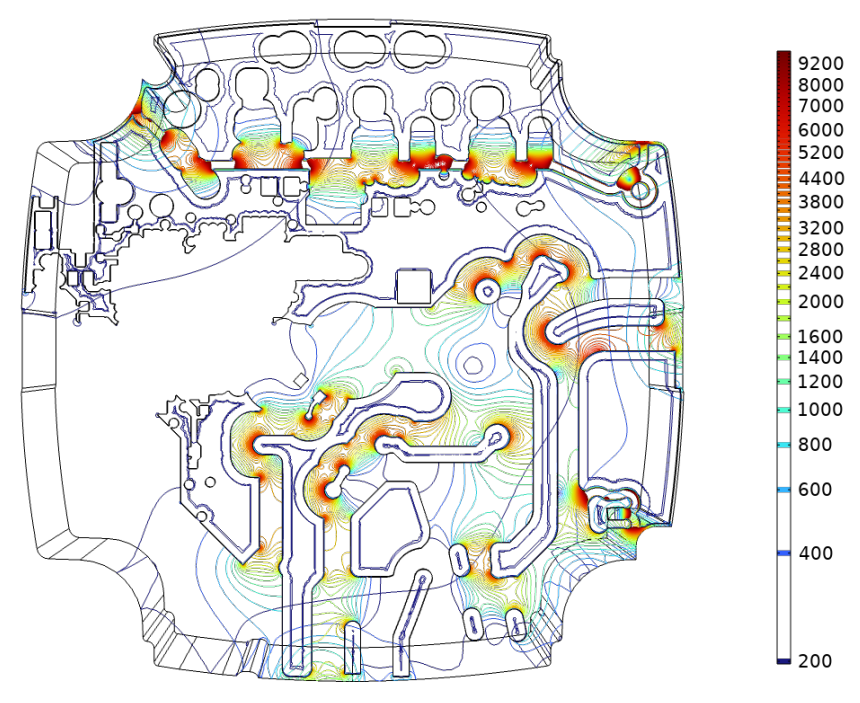
This article is brought to you by COMSOL . In pursuit of improved range, greater reliability, and faster charging, electric vehicles are driving the demand for high-voltage electronics. Other applications driving this demand include wind farms, data centers, and server farms, to name a few. As the interest for high-voltage electronics increases, the risks associated with their sudden failure must be considered. Much of what causes high-voltage equipment to malfunction can be linked to the conditions of the climate…

spectrum.ieee.org

IEEE Spectrum

Fridays With Bob

When I started at Spectrum 25 years ago, a senior editor suggested that I find a “rabbi,” by which he meant someone who could mentor me in how EEs approach problems and evaluate potential solutions. I didn’t find one right away. Then in 2005 we decided to do a special report, focusing on the challenges of enterprise software development. I suggested we invite IEEE Life Senior Member Robert N. Charette , a self-described risk ecologist, prolific book author, and leading authority on risk management and software…

spectrum.ieee.org

IEEE Spectrum

IBM Claims Quantum Advantage With New Validation Techniques

Quantum computers promise to solve problems beyond the most powerful classical supercomputers. But this raises a fundamental challenge: How do you prove the validity of answers that can’t be calculated any other way? In a trio of papers released yesterday, IBM and collaborators say they have demonstrated several techniques for solving this conundrum. The holy grail for quantum computing is a machine that unambiguously solves problems that are impossible for a classical machine, something that has come to be known…

spectrum.ieee.org

IEEE Spectrum

Why NIST Researchers Spent 10 Years Measuring Gravity

Physicists have been trying to measure the fundamental gravitation al constant for well over two centuries. The current accepted value of big G , as it’s known, is 6.67430 × 10 -11 cubic meters per kilogram per square second. It also has an uncertainty of ±0.00015 × 10 -11 m 3 /(kg s 2 ). As far as constants of the universe go, that’s very uncertain. Stephan Schlamminger Schlamminger is a physicist at the U.S. National Institute of Standards and Technology. Stephan Schlamminger recently completed a 10-year effort…

spectrum.ieee.org

IEEE Spectrum

The Computer That Helped Win World War II

One summer day in 1941, a British radio operator was monitoring German military frequencies and heard something unexpected in her headphones. A later report called it “strange new music.” Sounding unlike the familiar Morse dit-dit-dah of enciphered messages sent over the German Enigma network, the “new music” was a rhythmic warble of binary teletype code being transmitted at high speed. Germany’s wartime engineers had developed a radically new encryption and transmission system. It was way more advanced than…

spectrum.ieee.org

IEEE Spectrum

SEM-Guided Low-kV FIB Finishing for Leading-Edge Semiconductor Failure Analysis

Discover how the ZEISS Crossbeam 750 FIBSEM sets a new benchmark for precise TEM lamella prep, tomography, and advanced nanofabrication. This delivers better resolution, better SNR, larger usable FOV, and shorter acquisition times. Learn how uninterrupted FIB milling will reduce damage and rework, accelerate time to TEM, and increase first pass success—so your FA, yield, and materials teams make faster, confident data driven decisions. Register now for this free webinar! Join us to discover how the new ZEISS…

event.on24.com

IEEE Spectrum

Largest Probabilistic Computer Hits 1 Million P-Bits

Probabilistic computers might one day tackle certain problems well beyond standard computers while at the same time avoiding the many hardware challenges that currently vex quantum computing. Now scientists reveal they have created the largest probabilistic computer yet, one with 1 million “probabilistic bits.” The researchers say their study reveals the way forward to building even bigger machines. Probabilistic bits , or p-bits, bridge the gap between the bits underlying regular computers and the qubits upon…

spectrum.ieee.org